Showing posts with label Cheese. Show all posts

Saturday, December 8, 2012

Christmas Baking - Cocktail Cheese Biscuits

Pin It


Lindaraxa's Christmas kitchen was hopping today and it was the perfect day for it...rainy and yucky to do anything but stay inside and vegetate.  I chose instead to start getting some of my presents ready, particularly the ones that are going out of town.


I baked half of the cocktail cheese biscuits and one batch of the Peppermint Bark Brownies as I am still experimenting with the latter.  I have so many to make I have decided to take a short cut this year and make the recipe I will be posting in the country blog.  The roasted pecans and the gingerbread men are on the docket for tomorrow.  I just might make my special mustard this weekend too but that one stays at home with maybe a tad for a very special friend.  It can be a particularly expensive proposition if you make it with the right ingredients!


I got different size Christmas tin boxes,  already half price, at Hobby Lobby.


Cocktail Cheese Biscuits

1 stick of butter, cut into pieces
2 cups grated extra sharp cheddar cheese
1 cup of flour ( I use King Arthur's)
1 tsp. dry mustard
1 tsp salt
1 tsp. cayenne (red) pepper or paprika

Preheat oven to 350 degrees. 

In the mixer with paddle attachment combine butter and cheese.  Add the mustard powder, salt and red pepper to the cup of flour.  Add the flour mix to the butter/cheese. Mix until it comes to a ball. Remove and shape into a log about an inch and a half in diameter.  If you are going to bake right away, put the dough in the freezer for about 10 minutes to harden so it will be easier to slice.  Slice in 1/4 inch thick slices, lay them in a baking pan slightly apart and bake for about 17 minutes.  Remove to a wire rack to cool.  Enjoy!

They will darken and crisp up when they cool.

Note.  Use really good cheese and grate it yourself.  Do not use the ready grated variety! Red pepper is the way to go.

This recipe has been adapted from 300 Years of Carolina Cooking


You might also want to try Cocktail Pecan Cheese Wafers in the lake blog

Monday, October 29, 2012

Pumpkin Queso Fundido

Pin It


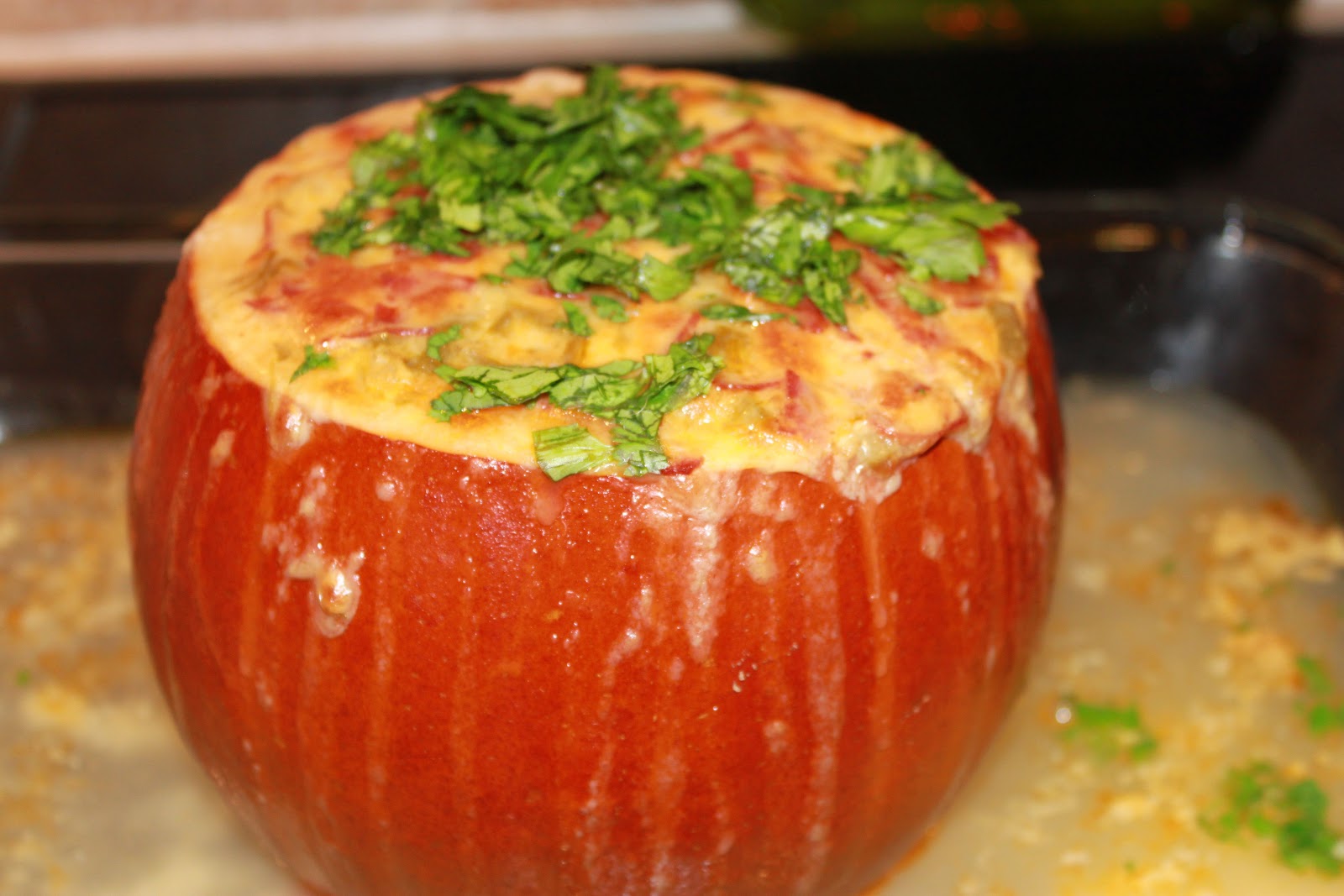
This past weekend we hightailed it to Lake Toxaway, North Carolina where my son's in laws have a lake house.  We couldn't have picked a better time of the year. Although the leaves were a bit past their prime,  the weather was perfect, warm enough during the day to be able to go out on the lake and chilly at night for a big fire.  On Friday night my daughter in law surprised us with this delicious hors d'oeuvre.  Both grownups and little kids lapped it up... perfect  for Halloween parties and Thanksgiving.

Dinner followed with Shish-kebabs on the grill and mashed potatoes with chives.  The whole menu was incredible.  I am so pleased to see her so enthusiastic and adventurous in the kitchen and so confident now that her recipes are proving to be real winners.  She'll be a force to reckon with very soon.

One of the things I like the best about this recipe is the texture it develops while it cooks.  As the pumpkin bakes in the oven the flesh mixes with the cheese, thickens it and gives it a slight pumpkin flavor.  


Serves 6 to 8

Ingredients
  • 1 2-to-3-pound sugar pumpkin
  • 8 ounces dried chorizo, diced
  • 1 jalapeno pepper (remove seeds for less heat), chopped
  • 1 4-ounce can chopped green chiles
  • 1/2 teaspoon ground cumin
  • 1/4 teaspoon cayenne pepper
  • 3 tablespoons all-purpose flour
  • 1 1/2 cups low-sodium chicken broth
  • 2 cups shredded mozzarella or Oaxaca cheese
  • 1 cup shredded monterey jack cheese
  • Chopped fresh cilantro, for topping
  • Tortilla chips, for serving
Directions


1. Preheat the oven to 375 degrees F. Slice off the top 1 1/2 inches of the pumpkin and discard. Scoop out the seeds and stringy pulp.

2. Heat the chorizo in a medium pot over medium-high heat until the fat begins to render, about 5 minutes. Add the jalapeno, green chiles, cumin and cayenne and cook, stirring, until the jalapeno softens, about 2 minutes. Stir in the flour and cook, stirring, until the flour is slightly toasted, about 2 minutes. Add the chicken broth and bring to a boil. Reduce the heat to medium and stir in the cheeses. Cook, stirring occasionally, until the cheese melts and the mixture is creamy, about 3 more minutes.

3. Place the pumpkin in a small baking dish and fill the pumpkin with the cheese mixture. Add 1 inch of boiling water to the baking dish. Cover loosely with foil and bake until the pumpkin is tender, about 1 hour, 20 minutes. Remove the foil and continue baking until the cheese is golden and bubbly, 20 to 25 more minutes. Let cool 5 to 10 minutes. Sprinkle with cilantro and serve with tortilla chips.


Photograph Lindaraxa
Recipe Food Network Magazine

Tuesday, October 23, 2012

By Request...Fig And Toasted Almond Brie

Pin It


This was the most requested recipe at the ladies lunch and the easiest to prepare. 


INGREDIENTS:

1/2 cup brown sugar

2 tablespoons water

6 fresh figs, stemmed and quartered

1 (14 ounce) round 4 1/4-inch diameter round Brie cheese

1/2 cup toasted almonds

1/2 teaspoon vanilla extract


DIRECTIONS:

Preheat oven to 325 degrees F (165 C).

Heat brown sugar and water in a small saucepan over medium heat until sugar is completely dissolved. Add figs and vanilla, and cook until softened, about 10 minutes. Stir in almonds.  Place brie wheel in a baking dish, and pour fig mixture over the top.

Bake in the preheated oven for 10 to 15 minutes, or until softened but not melted. Serve with crackers or baguette slices.


Recipe Epicurious

Thursday, June 9, 2011

Pasta With Brie, Tomatoes And Basil

Pin It


Although you can serve this as a first course, I prefer to make a meal of it in the summer.

I have basil coming out of my ears this year and the tomatoes at my farmers market are the best I have seen in a long time.  I know a pound of Brie is a bit much, but believe me, it is worth every cent in this recipe.

Ingredients

Serves 4-6 as an entree, 6-8 as a first course


4 ripe tomatoes, cut into 1/2 inch cubes

1 pound Brie cheese, rind removed, torn into irregular pieces

1 cup cleaned fresh basil leaves, cut into strips

3 garlic cloves, peeled and finely minced

1 cup best quality olive oil

salt to taste

1/2 tsp freshly ground pepper

1 1/2 pounds linguine

freshly grated imported Parmesan cheese (optional)


Directions

 
1. Combine tomatoes, brie, basil, garlic, 1 cup olive oil, salt and pepper in a large serving bowl. Prepare at least 2 hours before serving and set aside, covered, at room temperature

2. Bring 6 quarts of water to a boil in a large pot. Add the linguine and boil until al dente, about 10 minutes.

3. Drain pasta and immediately toss with the tomato sauce. Serve immediately.


Recipe courtesy of The Silver Palate

Tuesday, January 25, 2011

A Cheese Souffle

Pin It


Did you know I am a closet cook? Yep, sometimes when I am all by myself I practice stuff that I'm not good at, like souffles.  About a month ago my friend The Corinthian Column, an art collector, put me to shame with a gorgeous blue cheese souffle that he posted on his site.  Well!  Little did he know that souffles have always been my Achilles heel and just the thought of having to make one makes me weak at the knees.

When I was learning to cook, souffles were the domain of the great French chefs.  When my mother came back from her lessons at the Cordon Bleu, she could make two things that I know of...French Onion soup and a cheese souffle.  To watch her set up for tackling a souffle was like watching a general plan strategy for an important battle.  That kind of put a damper for me but I knew that if I ever wanted to be a real cook, sooner or later I would have to make a decent souffle.  Not spectacular...just decent.

Throughtout my cooking career, every time I tackled a new recipe it was never good enough in my eyes.  The more I tried, the more disappointed I became, so I stopped.  That is, until a couple of days ago.  Going through one of the French cookbooks at Barnes & Noble,  this recipe caught my eye mainly beause it was for a small souffle;  secondly, because it was so simple...well, even a caveman could do it; and third because it was by none other than Francoise Bernard the grande dame of French popular cuisine.


I quickly jotted down the ingredients in a piece of paper, together with the oven temperature and the time and off I went to conquer the beast.  The result...well I don't need to tell you, just look for yourself.  As for the taste...as good as any souffle I've had in France or at La Grenouille where they serve it with a cheese sauce on the side (we'll tackle this later).

The recipe is really for two and was made in two 5 inch souffle dishes, buttered and coated with grated Gruyere cheese.

Oven Temperature 350 degrees for 25 minutes

First make a cup of bechamel with 2 TB. butter, 2TB flour and 1 cup of milk.  Melt the butter, add the flour cook for a minute and add 1 cup of hot whole milk.  Cook until it almost comes to a boil.  The sauce will be nice and thick.

Add 3/4 cups grated Gruyere cheese to the sauce, salt and pepper.  I added a little cayenne pepper also.

Separate 3 eggs and add the yolks to the bechamel sauce. Mix well.

With a portable mixer*, beat the egg whites until stiff peaks.  Make sure you beat well or souffle won't rise.  With a wooden spoon take some of the whites and incorporate into the sauce and then fold the rest carefully so as not to deflate.  Don't do this too much, it's okay if you have some patches of white "clouds".  

Fill the two souffle molds leaving about 1/2 inch at the top. I inserted a finger in one and went around the rim.  I didn't do it with the second and it really didn't make a difference.  Place in the preheated oven.

Pour yourself a glass of rose and mix a simple green salad.  By the time you are finished, your souffle will be done.

The moral of the story...When making a souffle, don't over think it!


 Note:  Do not open that door! turn the light on and watch to your heart's content.  When you see that it looks like mine, you have conquered the beast!
*It is better to beat this small quantity of egg whites with a portable mixer, if you have one.

Sunday, January 23, 2011

The Cheese Course...A Brief Primer

Pin It


Americans, to put it mildly, don't know how to eat cheese.  And why should they? Aside from Wisconsin or Vermont cheddar, cheese is not something Americans have grown up with.  Our idea of cheese is melted over a hamburger, sliced for ham and cheese sandwiches or as part of a tray carelessly put together to keep away the hunger pangs before a meal.  Worse of all, we serve it straight from the refrigerator.

In Europe, particularly in France, cheese is as venerated  and enjoyed almost as much as wine. Wine and cheese have many similarities including the fact that both are fermented, complex and have a rich heritage.  Just as wine can be made from different grapes, cheese can be made from the milk of different animals.  Where the grapes are grown and how they are cultivated will be reflected in the wine, just as where the animals live and what they eat will be reflected in the cheese.    That is why terroir is just as important when pairing cheese with wine as it is when pairing wines with food.  In other words, if it grows together it goes together.  It's as simple as that.


Getting to know the delights of cheese can be an intimidating prospect, if only because of the astounding number of varieties available. Humankind has been engaged in creating different cheeses ever since the process was discovered by accident at least 10,000 years ago. France alone produces over 500 different varieties of cheese and there are at least a thousand individually named varieties worldwide.


Cheese categories And Wine Pairings


 The following are categories of cheese and suggested wine pairings. Most people prefer serving the softer, more delicately flavored cheeses with lighter, fruitier wines. As the cheeses become more flavorful and assertive, you should select from heartier, more intensely-flavored wines. Some cheese experts point out that you can sometimes set up delicious pairings by deliberately contrasting flavors. Some soft creamy cheeses go very well with complex, full-bodied wines.

In general, cheese and wine produced near the same region marry well. For example, serve Sancerre wines with Crottin de Chavignol or a Vin de Jura with Comte. But what’s most important is that neither overwhelms the other. Thus robust blue cheeses should be matched with equally strong red wines*, while more delicate, creamier cheeses need an intense white or fruity red wine. Spanish sherries, both dry and sweet are excellent partners for many cheeses; especially those from Spain. The bottom line here is that your own personal preference should prevail.


I.  Fresh, rindless cheese: unripened, moist and quite soft, with a high water content. Those made from cows milk tend to be mild in flavor; goat and sheep milk have stronger flavors.

Examples: French Chevre  (mild to tangy) and Montrachet (slightly tangy), Greek Feta (salty and milky), Mozzarella (mild), Italian Robiola (mild and creamy) and Ricotta (mild).

Wine Pairing: Brut champagne/ sparkling; Pinot Blanc; Pinot Gris; crisp, high-acid Sauvignon Blanc, such as Pouilly-Fume and Sancerre; Beaujolais; Chenin Blanc; or Vouvray.


II. Soft-ripened :bloomy rind with soft edible skin. When fully ripe and at room temperature, center is runny.

Examples: French Brie (mild and buttery to pungent) and Camembert (slightly acidic and earthy); triple-cremes such as French Gratte-Paille (artisanal cheese), Brillat-Savarin, Explorateur , and Saint-Andre (all rich and buttery).

Wine Pairing: Brut Champagne/sparkling; lighter, dry styles of Riesling and Chenin Blanc; Beaujolias, Cabernet Sauvignon; fruitier styles of Pinot Noir and Merlot.


III. Semi-Soft washed-rind cheeses (the rinds have been rubbed or washed during the ripening process) .

Examples: French Pont-l’ Eveque, Epoisses, and Livarot (very strong artisanal cheese); Munster from Alsace, Italian Taleggio (mild and buttery); and Spanish Mahon.

Wine Pairing: sturdy red wines such as Syrah, Barolo, Barbaresco, weightier Pinot Noir or Burgundy.


IV. Semi-Soft : aged and protected by an inedible wax rind. Can be sliced, but difficult to grate.

Examples: Italian Bel Paese (mild and sweet); Dutch Gouda and Edam (salty and tangy depending on age), American Brick (mild to strong depending on age), Italian Fontina (nutty and smoky) and Bel Paese; French Port-Salut (mellow to sharp) and Reblochon (mild and creamy).

Wine Pairing: Chardonnay and oak-matured Sauvignon Blanc (Fume Blanc); Alsace Riesling,; Gewurztraminer; Viognier; Roussanne and Marsanne; Pinot Noir.


V. Hard: drier and firmer than semi-soft and aged for varying lengths of time. Can be sliced and grated.

Examples: French Cantal (nutty and mild to sharp); English or American Cheddar (mild to sharp depending on age); Swiss or Emmenthaler (sweet and nutty); Spanish Manchego (mellow, but full flavored); American Monterey Jack (mild to mellow) and Italian Provolone (mild to sharp).

Wine Pairing: Fino and Amontillado Sherries, Barbera, Cabernet Sauvignon, Grenache, Merlot, Mourvedre, Nebbiolo, Sangiovese, Syrah, Tempranillo.


VI. Blue-Veined: Injected with a mold to produce veining prior to ripening. Consistencies vary from creamy to dry and crumbly.

Examples: French Bleu du Bresse (piquant, but milder than most blues), and Roquefort (sharp and pungent), Spanish Cabrales, Danish Blue (sharp and salty), Italian Gorgonzola (tangy and piquant), American Maytag Blue (strong and salty), and English Stilton (piquant, but milder than most blues).

Wine Pairing: Extra Dry or Demisec Champagne/sparkling, late-harvest
Chenin Blanc, Riesling, Sauvignon Blanc/Semillon and Tokay, old vines
Grenache and Zinfandel, reserve Cabernet Sauvignon and Shiraz/Syra,
Vintage Port, Sauterne* (the ultimate!!!) or dessert wine.


VII. Grating Cheeses: hard, with crumbly texture and ripened for various lengths of time. Hard to slice; best grated.

Examples: Italian Asiago (usually sharp), Parmigiano-Reggiano (sharp, nutty and often salty) and Pecorino Romano (usually sharp); and Swiss Sapsago (grassy and herbal).

Wine Pairing: Fino Sherry, Nebbiolo, reserve Sangiovese, Syrah, Zinfandel.


Ultimate Pairings:

Goat Cheese with Sancerre
Stilton with Port
Roquefort with Sauternes


Fromagerie Berthelemy


My Favorite Cheese Shop:

Fromagerie Barthélémy,  51 rue de Grenelle,  Paris 75007

Perhaps the most famous in all of Paris, this tiny shop boasts over 200 cheeses. Luckily it is within walking distance of where I usually stay and I never go by without peering in and taking a sniff!


The Cheese Course...Serving Tips:

Don't serve too many cheeses. Even one carefully chosen cheese paired with an excellent wine can constitute a pleasing cheese course. Put three or four cheeses of differing flavors, shapes and textures on a large cheese platter, set out an equal number of knives and let guests slice and savor. I suggest a soft Brie, such as the luxurious Brie de Meaux from France or better still, a Brillat-Savarin; an American Cheddar, preferably an unpasteurized white cheddar from Vermont,  a blue cheese like Blue de Bresse or Roquefort and something just for fun like a spicy, aged Gouda. Or hone in on a particular country like Spain and serve Manchego, Cabrales, La Serena, and Mahon . If you crave blue cheese, go all out with a platter of Maytag, Irish Cashel and Stilton, although this can be a bit overwhelming.  I have often served a platter of different goat cheeses, both domestic and imported after a Provencal menu.  Accompanied with fig jam, honey, pears and a baguette it is mana from heaven!

Always serve cheese at room temperature. Depending on the warmth of the room, it shouldn't take more than an hour. Leave cheese wrapped while its warming up.

Arrange wedges and logs far from one another so flavors remain distinct. Figure on a two-ounce serving portion of each cheese per person if the cheese platter is an appetizer or dessert; double that if cheese is the whole meal.

Tell your guests the name, origin and type of each cheese, and in which order it’s best to sample them. As in wine-tasting, progress from milder cheeses to stronger ones.

Pair foods that won't overshadow the delicious flavor and texture of the cheese. Some possibilities include:

Breads: Baguettes, Brioche, Walnut Bread

Fruits: Fuji or Gala Apples, Anjou or Bosc Pears, Grapes, Melon, Peaches, Strawberries

Dried Fruits: Cherries, Currants, Dates, Figs, Raisins, Apricots, Cranberries

Nuts: Walnuts, Pistachios, Almonds, Hazelnuts

Other: Fruit Chutneys, Olives, Honey, fig jam (particularly good with goat cheese!)


Cheese Etiquette


When serving cheese a la francaise, an individual serving is cut from each cheese being served and place on a diner's plate and eaten with a knife and fork.

The edibility of a cheeses rind is a matter of taste and common sense. The rind of stilton is obviously inedible, while eating the rinds of Reblochon, Brie or Camembert is a matter of personal preference. Its acceptable to trim them away.

It is considered bad manners to cut the "nose" off a wedge of Brie.  Long slices should be taken from alternate sides to maintain its shape.

Truckles such as Stilton need to have a "lid" cut off the top.  You can either use a cheese spoon to serve the cheese from the opening or cut down from the opening to serve small wedges.  Replace lid when storing the cheese.  Same can be done for Gouda or Edam cheese.


When to Eat Cheese

You can either serve cheese as a separate course at the end of the meal, instead of or before dessert, like the French; or as the Italians as a separate course before the meal.  In this case it is served with some form of salumi (cured pok products) and fruits or vegetables, olives, nuts, bread and wine. It is also served as an appetizer before an evening meal.

A wonderful alternative is to serve it as the meal for lunch together with a baguette and perhaps a slice of terrine or jambon de bayonne and a salad.  A glass of wine wouldn't hurt either!  This is by far my favorite way and one which I enjoy often, particularly when I'm by myself.


A blue cheese with ash in the middle


Buying and Storing Tips:


Try to buy from a specialty cheese or gourmet shop if one is available where you live.  The selection will be wider and fresher.  Supermarkets are not the best place to buy cheese. Taste before you buy whenever possible.

Never buy pre-sliced cheese.

Cheese, like wine, is seasonal.  Check with your cheesemonger to buy a particular cheese at its peak.

Buy cheese that has a natural rather than a plastic rind. Fresh-cut cheese will taste better than a plastic-wrapped wedge. Look for a cheese that seems fresh, with no mold or seeping liquid. Don’t buy cheese in a puffed-up package that looks as if its ready to burst. And never buy cheese that smells even slightly of ammonia.

To store cheese, wrap it in wax paper or parchment paper, (tin foil is okay also) then overwrap with plastic wrap. Never wrap cheese in plastic wrap alone, it makes cheese sweat.  Once you have unwrapped the cheese, discard wrapping and put cheese in new wrapping. Store in your refrigerators produce bin which has high humidity.  Cheeses that come in a box, such as Camembert, should be stored in the box.

The softer the cheese, the shorter the shelf life. Very soft cheese such as chevre should be used within a few days. Hard cheeses will keep for up to a month.

No cheese benefits from freezing, so buy cheese in small quantities and use it while its fresh.  I have had good luck freezing Stilton and Gruyere but not for long periods of time.

This is as much as I know about cheese (with a little help from some of my books); but there is tons of information out there in books or on the web.  I have three books which I strongly recommend on the subject and which have served me well. 


All images Getty


Thursday, January 13, 2011

Mostarda...La Mostarda di Agrumi

Pin It


Mostarda is a distinctive fruit conserve that mixes the intense spice of mustard with the sweet flavors of candied fruit.   Over the centuries the agrodolce flavor characteristic of mostarda has taken on countless variations. By the 19th century there were many cities with their own versions, and the varieties of mostarda made in Cremona became widely regarded as the most special because of the complexity of their ingredients.

The word mostarda is traced to the Latin word ardens, or ardente in Italian. Ardente means burning, and it refers to the spice of the white mustard flour that was once added to the unfermented grape must, or mustum, to make mustum ardens. In French, this spicy conserve was called moût ardent, which then became moutarde, and was translated into Italian as mostarda. While its name may come from French, mostarda is entirely an Italian specialty, and like most of the country’s recipes, there are several regional versions of this preserve.

In Lombardy, the mostarda of Mantova is prepared with sliced quince, apple or local pear, and in the nearby town of Viadana, a spicier version is made with passacrassana pears, a winter variety with dense flesh. Puréed quince and pears, mixed with candied orange and citron peel, characterize most mostarda from the Veneto region, except for that from Verona, which calls for vegetables. Grape must is still used in some recipes from Emilia-Romagna, where it is mixed with quince, pear and prune.

According to tradition, mostarda is served in the fall, paired with bollito misto, Italian boiled meats. Today, mostarda is not limited to a single season and complements a wide range of foods. For the mostarda of Cremona, each fruit has its own dish: fig mostarda is served with herbed cheese and salumi; clementine mostarda with roast meats and fresh cheeses; while tome cheese, prosciutto cotto and Parmigiano-Reggiano cheese are all ideal pairs for mostarda with pumpkin. With pear mostarda, serve Parmigiano-Reggiano and Felino salame, and for melon, serve culatello and fresh cow’s milk cheeses. The mostarda of Mantova, a fundamental ingredient in the local tortelli, is great with boiled white meat and medium-aged cheeses.

Mostarda is difficult to find in this country but easy enough to make at home if you are looking for authentic flavors that are bright and pure. Serve a small bowl of this citrus-flavored recipe alongside fresh cheeses, or pair it with roasted meats. The preserve's sweet and sour flavors also play well with fish and shellfish.

I personally love pear mostarda paired with Roquefort or Stilton and I will try to find a good recipe to post in the future.

If you like the idea but don't want to go through the (slight) trouble of making it, you can buy Mostarda di Cremona and Mostarda di Milano through Amazon.com, although I can guarantee it just won't be the same!

La Mostarda Di Agrumi

Makes 3 cups


Ingredients

4 navel oranges

3 lemons

1 1/2 cups (18 ounces) acacia honey

1 1/4 cups sugar

1 tablespoon freshly squeezed lemon juice

2 fresh rosemary sprigs

2 tablespoons dry mustard

2 tablespoons dry white wine


Instructions

Line a baking sheet with parchment paper.

Cut off a 1/2-inch slice from top and bottom of each orange to expose fruit, then score orange peel from top to bottom at 1/4-inch intervals, cutting through pith, with a sharp knife. Pull off each strip of peel, including pith, with your fingers. (Reserve fruit for another use.) Repeat with lemons. Cut peels in half widthwise.

Fill a 2- to 3-quart heavy saucepan with 4 cups water; bring water to boil. Add citrus peels, return water to boil and cook for 1 minute. Drain peels and run under cold water to cool. Pat dry with paper towel.

Combine honey and 1/2 cup cold water in a large saucepan; bring mixture to boil over medium-high heat. Add peels, reduce to a simmer and cook, stirring occasionally, for 25 minutes. Remove mixture from heat and let rest for 10 minutes. Return mixture to simmer and cook until peels are semi-translucent and honey syrup is reduced to about 1/2 cup, about 25 minutes more.

Set a fine-mesh sieve over a large bowl; drain peels, reserving honey syrup. Transfer peels to prepared baking sheet and cool to room temperature.

Meanwhile, in a large saucepan, combine sugar, 1 cup cold water and lemon juice; bring to a boil and cook, stirring occasionally, until liquid is clear and slightly reduced, about 5 minutes. Remove from heat and add rosemary sprigs; let syrup cool for 10 minutes, then remove and discard sprigs. Whisk in reserved honey syrup.

In a small saucepan, whisk together mustard and wine. Set over medium-high heat and cook, whisking constantly, until mixture is thick and smooth, about 3 minutes. Add mustard mixture to syrup mixture and whisk well to combine.

Transfer peels to a 4-cup heatproof glass jar with a lid. Pour syrup over peels (discard any remaining syrup), seal jar and refrigerate for at least 6 hours or up to 10 days


Information recipe and photo from La Cucina Italiana

Wednesday, January 12, 2011

Pecorino With Honey & Walnuts

Pin It


I usually don't like to try recipes from people who are not dedicated cooks but in this case an exception was made.

Last month while looking for Christmas decorating ideas in one of my many Carolyne Roehm books,  I came across this picture.  Now, she may be my idol as to table settings and gift wrapping but I would not bet the bank she's a good cook.  Not by the looks of her!  She's too skinny for one and secondly she just doesn't look like the type.  That doesn't mean she doesn't have good recipes that she has probably collected from visiting friends who have fabulous chefs.  So what could go wrong with trying this combination?  After all, I had all the ingredients in my pantry including a huge Pecorino Romano I had recently purchased at Costco!

This is sensational,  particularly after dinner in lieu of dessert;  although, of course, you could serve it as an hors d'oeuvre any time of the year.


Ingredients

½ cup honey
15 walnut halves
1 pound young pecorino toscano

Preheat oven to 450°.

Directions


Mix honey and walnuts in small bowl. Slice pecorino ½" thick and slightly overlap in baking dish. Bake 6 minutes until slightly runny. Pour honey and walnut mixture over cheese. Serve with crusty bread.


Recipe Carolyne Roehm

Friday, November 5, 2010

Camembert Croquettes

Pin It


The holidays are coming and with it a lot of celebrations and parties.  I am sure you will be serving plenty of cheese and crackers, something I try to avoid, particularly if there is something else to choose from. Why spend those calories!

I don't know if you have noticed, but cheese has gotten quite expensive and to top that, guests barely touch it when there are other exiting things being passed around.    In the past, I have been guilty of having a plate of cheese and crackers, as a filler,  and invariably, I end up throwing most of it away after I've tired of the leftovers. Yes, I know, it's an easy thing to pull together but believe me, at a big party,  it will only go to waste.   

To me spending money on cheese makes sense when you serve it like the French, after dinner and before or in lieu of dessert.  Then, by all means, spend it on your favorites, but you don't need to go overboard when three different cheeses will do.  I usually serve a Camembert which, to me, is a little more interesting than a  Brie, paired with one of my favorites, Stilton, and some type of  goat cheese.  Fig marmalade to accompany and English crackers are all you need to go with it, but don't forget the port!

I came across this simple recipe in the Worldwide Gourmet and thought I would share it with you if case you decide to go to Costco and stock up on all their great cheeses.  Great prices but have you notice their size? After a week of making myself sick trying to justify their purchase, I am always looking for things to do with what remains.  In this house, NOTHING, ever gets thrown away.  Remember those poor kids in China?? Who would have thought they would end up supporting our debt!

You can substitute Brie for the Camembert or something else with the same consistency.  Check out the Manchego and Serrano Croquettes I posted awhile back.  They are definitely something I would spend my calories on!

Total time: 30 to 60 minutes

Preparation time: 20 minutes

Cooking time: 20 minutes


Ingredients

- 1 Camembert

- 100 g (6 tbsp.) butter + 20 g (4 tsp.) for the baking sheet

- 40 g (1/4 cup) flour

- 40 g (1/4 cup) cornstarch

- 150 ml (10 tbsp.) milk

- 1 egg

- 1 tbsp. oil

- 250 ml (1 cup) breadcrumbs

- Salt and cayenne

- Oil for frying

Method

1.Make the béchamel sauce: melt the butter; when foamy, add the flour and cornstarch; let color slightly; remove the pan from the heat; whisk the roux while slowly adding the milk; return to the heat and continue whisking until thickened; season with salt and cayenne.

2.remove the rind from the camembert; cut the cheese into strips; add to the béchamel and let melt for 5 minutes, stirring constantly;

3.butter a baking sheet; pour the mixture on it and spread evenly; let cool;

4.heat the frying oil in a pan;

5.in a bowl, beat the egg with 1 tbsp. oil; pour the breadcrumbs in another plate;

6.cut the cheese mixture into squares or sticks; dip each piece in egg, then breadcrumbs; repeat until all the cheese is breaded;

7.fry the croquettes in hot oil for a few minutes; turn so that they brown on both sides; drain on paper towels; place on a serving platter, cover with a cloth to keep them hot and serve immediately.

Cooks Note

Here's an idea..melt some hot pepper jelly or fig preserves and serve as a sauce to accompany the croquettes!

Recipe adapted from Worldwide Gourmet

Wednesday, April 7, 2010

10 Recipes for Leftover Ham!

Pin It

Easter is one of the best holidays for leftovers.  If you baked a big ham, there is a bonanza of recipes you can make and even freeze using both the bone and the meat.  By the time I'm finished with that ham everybody is threatening a ham boycott!

To begin with, never, ever, ever throw a bone away. In most cases, they are the the basis for a great soup or broth and even a sauce. Always look inside your refrigerator for interesting things to cook with what you already have. Take a look inside the "old cemetery" and see what is going to go bad before too long. Some things may already be too dead to salvage. Throw those out! As to the rest, you will be surprised at how many ideas will pop in your mind.

Some of our best and most creative recipes sometimes come from these leftovers, and I can't tell you how proud you will feel after you have used them. You don't have to use up all the ham in one week either.  Slice it, freeze it and save it to make any one of the following recipes next week, or next month! Chopped frozen ham defrosts quickly and can also be used in omelettes and sofritos for rice and other dishes. If you haven't used that Easter ham yet, freeze it  before it's too late.

So, forget those ham sandwiches and take a look at these great suggestions for what's left:


Ham And Green Eggs

and...more recipes in:

This should tie you over 'til next Easter!

Monday, January 18, 2010

Welsh Rarebit...More Comfort Food!

Pin It
Photo: Rea Drummond

Welsh Rarebit or Welsh Rabbit is a traditional English dish often eaten as a midnight snack.  I love to have it for lunch or as a light supper when we've had a heavy midday meal.  For some reason, it reminds me of our life in Connecticut and of my father who simply adored it.  Perhaps that is why it came to mind last week after the light dusting of snow we had on the ground here in North Georgia.

The dish is said to have originated in Wales in the 18th century. The first recorded use of the term Welsh Rabbit was in 1725, but the origin of the term is unknown. It may be an ironic name coined in the days when the Welsh were notoriously poor;  only better-off people could afford butcher's meat, and while in England rabbit was the poor man's meat, in Wales the poor man's meat was cheese.

Welsh Rarebit is a vintage throwback to Sunday dinners and cocktail parties in the 1950’s. I’m certain this is why I remember the dish being so popular in my home.  Also, if you come home with a hangover, this will take care of it  in no time.  Just make sure you always have some in the freezer, whether it's your own or the one made by Stouffer's which is pretty darn good.   Leftovers are great over steamed cauliflower or broccoli and kids just adore it...must be the beer!


Serves 4

Ingredients

1 pound Cheddar, Double Gloucester or other English cheese, grated
6 tablespoons butter
2 tsps. Dijon mustard, or to taste
1/4 teaspoon cayenne
4 tsps. Worcestershire sauce, or to taste

1 12 oz bottle  strong dark beer, like Guinness
4 egg yoks
4 to 8 pieces lightly toasted bread
1/4 tsp paprika

Method

1. Put butter in a saucepan on top of a double boiler over medium heat and ad grated cheese, mustard, cayene and Worcestershire sauce. Beat eggs into the beer and add to the melting cheesse.  Cook until smooth. Taste for seasonings and adjust to desired sharpness.

2. Remove from heat and pour over toast.  Sprinkle some paprika on top.  Serve immediately.

Note:   You can also put under the broiler until bubbly after you pour over toast.
Please use a good dark beer like Guiness stout...light American beer just won't do!

Wednesday, January 6, 2010

Tapas!...Serrano Ham Croquettes With Manchego Cheese

Pin It
 I am going to start the year with a series of tapa recipes.They are not only great on their own but can also be served as part of the menu for a tapas party.  They are an inexpensive, filling and fun way to entertain, particularly in the present economic times.


Unlike hors'oeuvre, tapas are substantial, being in essence small dishes combined to make a full meal. So... just because we are not making as much money this year, don't think for a minute that we are going to stop entertaining.  We are just going to readjust our thinking and our wallets and think of new and creative ways to have fun and eat well!


These Serrano and Manchego croquettes are served at a restaurant called Sra. Martinez in the Design District in Miami. I had a delightful lunch there last Spring, after visiting the local Farmer's Market with a friend. The chef and owner is Michelle Bernstein, formerly of Azul at the Mandarin Oriental. I thought I had died and gone to heaven!.  Since then, I've been searching high and low for a recipe and I think I've found it.  Make sure you serve them with a fig marmelade on the side.


For my chicken and turkey croquettes click here.

Stay tuned for more tapas recipes, although I am going to stagger them around so we don't get bored!


Serves 8 as a tapa
Makes about 16

Ingredients

2 tablespoons unsalted butter

2 tablespoons olive oil

1/4 cup finely chopped onion

Coarse salt and freshly ground pepper

7 tablespoons all-purpose flour, plus more for shaping

1 3/4 cup whole milk

6 tablespoons finely chopped serrano ham

1/3 cup grated plus 1/4 cup Manchego cheese, (about 1 3/4 ounces)

3 large eggs

1 1/2 cups fresh breadcrumbs

Vegetable oil, for frying

Fresh flat-leaf parsley sprigs, for garnish

Fig Marmelade


Directions

In a food processor process first the cheese into fine crumbs.  Clean the bowl then process the ham until finely minced.  Set both aside until needed.

Heat butter and oil in a medium saucepan over medium heat until butter has melted. Add onion; season with salt and pepper. Cook, stirring occasionally, until onion is translucent, about 3 minutes. Add flour; cook, stirring, 1 minute. Whisk in milk, and cook, whisking, 3 minutes. Whisk in ham and 1/3 cup cheese. Season with salt and pepper as desired. Spread mixture onto a baking sheet, and let cool completely. Mixture can be refrigerated in an airtight container up to 2 days. Croquettes must be very cold before you go to the next step.  I usually make them one day and bread them the next.

Whisk together eggs in a shallow dish. Stir together breadcrumbs and remaining 1/4 cup cheese in another shallow dish. Scoop tablespoons of cooled mixture, and shape with floured hands into 2-inch ovals. Working with 1 oval at a time, coat in beaten egg, then in breadcrumb mixture. Transfer to a baking sheet lined with parchment paper.

Heat 2 1/2 inches oil in a large, heavy stockpot until it registers 375 degrees on a deep-fry thermometer. Working in batches to avoid crowding, fry croquettes, flipping once, until dark golden brown, 1 to 2 minutes total. Using a slotted spoon, transfer to paper towels to drain. (Adjust heat between batches as needed to keep oil at a steady temperature.) Serve warm, garnished with parsley sprigs. Accompany with fig marmelade.

Monday, December 28, 2009

Alain Ducasse's Gougeres

Pin It

These French treats are crisp on the outside, airy on the inside, and light but loaded with flavor.  They are essentially  a savory choux pastry with cheese.  Traditionally, gougères are made with Gruyère, but other cheeses are sometimes used. They are a specialty of Burgundy.

Whenever I serve champagne, I make sure I have these around.


Makes about 28 gouyeres


Ingredients

1/2 cup water

1/2 cup milk

1 stick (4 ounces) unsalted butter, cut into tablespoons

Large pinch of coarse salt

1 cup all-purpose flour

4 large eggs

3 1/2 ounces shredded Gruyère cheese (1 cup), plus more for sprinkling

Freshly ground pepper

Freshly grated nutmeg

Directions

Preheat the oven to 400°. Line 2 baking sheets with parchment paper. In a medium saucepan, combine the water, milk, butter and salt and bring to a boil. Add the flour and stir it in with a wooden spoon until a smooth dough forms; stir over low heat until it dries out and pulls away from the pan, about 2 minutes.

Scrape the dough into a bowl; let cool for 1 minute. Beat the eggs into the dough, 1 at a time, beating thoroughly between each one. Add the cheese and a pinch each of pepper and nutmeg.

Transfer the dough to a pastry bag fitted with a 1/2-inch round tip and pipe tablespoon-size mounds onto the baking sheets, 2 inches apart. Sprinkle with cheese and bake for 22 minutes, or until puffed and golden brown. Serve hot, or let cool and refrigerate or freeze. Reheat in a 350° oven until piping hot.


Gouyeres the way they should look before baking

Notes

When making the choux pastry, it is important to be sure that each egg is fully incorporated into the batter before adding the next. Don't worry if the batter separates and looks curdled at first. Keep beating, and it will come together nicely.

Gougères freeze well so always try to bake extras  After baking, allow them to cool completely. Spread the gougères out on a baking sheet, cover the sheet with plastic wrap and freeze them until they are firm. Then store them in sturdy plastic bags for several months.

All fotos fxcuisine.com

Thursday, August 20, 2009

Chez Panisse Baked Goat Cheese Salad

Pin It It's funny how birds of a feather "post" together. I've had this recipe on the docket for months to post in case of a jam.

Yesterday I noticed that David Leibowitz beat me to it and posted it on his blog. He should know, he worked at Chez Panisse years ago. Then the Fiesta Salsa appeared in Bitten's blog yesterday in the form of a summer salad. And today, I noticed that one of the food blogs I follow had posted a recipe for lemon pound cake! Are we all running out of recipes? I don't think so! although by the 5th year of a food blogger's career it must be difficult to come up with 3 recipes a week. Thankfully, I don't see Bitten or any of the other pros at a loss for a recipe.

When I have a dinner party, I purchase one of the big chevre logs at Costco, marinade according to my recipe for the goat cheese appetizer posted in the Spring, and save one half for this salad. The result... even better, so plan ahead!


Serves 4


Ingredients:

4 rounds Goat Cheese, fresh (1/2 inch thick)

3-4 sprigs Thyme, fresh

3/4 cup Olive Oil, Virgin

1 cup Bread Crumbs, fine and dry

1 tsp Thyme, dried

2-3 Tb Vinegar, Red Wine

Salt & Pepper to taste

4 Scoops Greens, fresh garden mix

Day-old Baguette (sliced 1/4 inch)

1/2 cup Butter

2-3 cloves Garlic


Procedure:

Preheat oven to 350°F.

Lay 4 rounds of fresh goat cheese ( 1/2 inch thick) and 3-4 sprigs of fresh thyme in a deep dish and pour 1/4 cup virgin olive oil over it and allow to marinate for a day.

In a bowl, mix together 1 cup fine dry bread crumbs and 1 tsp dried thyme.

In a separate bowl mix a vinaigrette by whisking together 1/2 cup virgin olive oil, 2-3 Tbls red wine vinegar and salt and pepper to taste.

Slice a day-old baguette into 1/4-inch slices. Melt 1/2 cup butter and brush each slice of baguette with it.

Spread these bread slices on a baking sheet and bake in a preheated oven at 350°F for 5-7 minutes, until just light brown.

Increase oven temperature to 400°F.

Peel and cut in half 2-3 cloves of garlic. While the bread is still warm, rub each piece with a cut clove of garlic.

Dip the marinated cheese rounds in the bread crumb mix and place in a lightly oiled baking dish.

Bake in preheated oven at 400°F for about 6 minutes, until cheese is lightly bubbling and golden brown.

Toss the greens with enough vinaigrette to lightly coat and arrange them on 4 round salad
plates.

Place the cheese rounds in the center of the plates with the more browned side up and arrange the croutons around the cheese.


Soft Goat Cheese on Foodista

Sunday, August 16, 2009

Corn Quiche Mexican Style

Pin It


I saw this recipe in one of the Spanish magazines years ago, cut it out and it has been sitting in my recipe notebook since then. Today I tried it on my two toughest critics...my mother and our cleaning lady. The latter is a master with tortillas so her opinion was not to be dismissed lightly. The former is my Mother, my toughest critic across the board and a great cook. They both loved it! I tweaked it a little bit adding the green peppers and reducing the Tabasco and I can say it is definitely a keeper.

Be careful when you insert the tortillas in the ramekins so that you don't tear with your fingernails! you don't want any holes in it or the filling will run out to the bottom. You may have to make some pleats to get it to fit snugly in the ramekins and if the edges poke out don't worry. The result will be a beautiful flower with a delicious custard inside. Your guests will think you worked for hours! I am going to try them next week with the quiche Lorraine custard and will post the results. The possibilities are endless! Buen provecho.

Serves 2

4 flour tortillas
olive oil
3 eggs
1/3 cup milk
1 Tb flour
1/8 tsp Tabasco
1/2 cup canned corn drained
1/2 cup finely chopped ham
3/4 cup grated Cheddar cheese
1 TB chopped onions
1TB chopped green peppers
Salt & Pepper

You will need 2 ramekins 5in X 2 in high
Preheat oven to 400 degrees

Oil the ramekins. Spray or brush olive oil on both sides of the tortillas. Insert the tortillas in the ramekins pushing all the way to the bottom to form a cup. Be careful you don't tear the tortilla. Fold sides if you need to. Cook 10 minutes until golden. Take out and cool.

In a bowl, beat the eggs with a wire whisk and mix in the rest of the ingredients. Pour into the ramekins and cook between 20-25 minutes until the quiche is set. Check with a toothpick. If the tortillas are browning too much, reduce the heat to 375 for the last 10 minute. Take out of the oven and let cool for about 10-15 minutes. Very carefully remove quiche from the ramekins using a fork and a spoon, separating from the sides and pushing up from the bottom. Serve hot.

A delightful entree for lunch with a simple salad and possibly a bellini sorbetto for dessert!

Thursday, July 30, 2009

Miss the Paris Cafes? Have a Croque Monsieur!

Pin It The Croque Monsieur, or “Crispy Mister,” appeared on Parisian café menus in 1910. The original Croque Monsieur was simply a hot ham and Gruyere cheese sandwich, fried in butter. Some believe it was accidentally created when French workers left their lunch pails by a hot radiator and came back later to discover the cheese in their sandwiches had melted.

Found all over France today, the Croque Monsieur - casually referred to as a Croque - has as many recipes and variations as it has cooks. I like mine fancy, with a nice Mornay Sauce* on top! It is second on my list only to the Reuben which is, hands down, my all time favorite. (the Pulled Pork sandwich is not far behind!)

This crunchy sandwich is served as an appetizer, snack, or casual meal. Try this recipe for an incredible experience. Bon appetit!

A nice double espresso should get you through the afternoon!


Serves 4 for a meal or 8 for a snack


Ingredients

2 tablespoons unsalted butter
3 tablespoons all-purpose flour
2 cups hot milk
1 teaspoon kosher salt
1/2 teaspoon freshly ground black pepper
Pinch nutmeg
12 ounces Gruyere, grated (5 cups)
1/2 cup freshly grated Parmesan
16 slices white sandwich bread, crusts removed
Dijon mustard
8 ounces baked Virginia ham, sliced but not paper thin


Directions

Preheat the oven to 400 degrees F.

Melt the butter over low heat in a small saucepan and add the flour all at once, stirring with a wooden spoon for 2 minutes. Slowly pour the hot milk into the butter–flour mixture and cook, whisking constantly, until the sauce is thickened. Off the heat add the salt, pepper, nutmeg, 1/2 cup grated Gruyere, and the Parmesan and set aside.

To toast the bread, place the slices on 2 baking sheets and bake for 5 minutes. Turn each slice and bake for another 2 minutes, until toasted.

Lightly brush half the toasted breads with mustard, add a slice of ham to each, and sprinkle with half the remaining Gruyere. Top with another piece of toasted bread.

Slather the tops with the cheese sauce, sprinkle with the remaining Gruyere, and bake the sandwiches for 5 minutes. Turn on the broiler and broil for 3 to 5 minutes, or until the topping is bubbly and lightly browned. Serve hot


*A Mornay sauce is a Béchamel sauce with shredded or grated cheese added. Usually, it consists of half Gruyère and half Parmesan cheese, though some variations use different combinations of Gruyère, Emmenthal cheese, or white Cheddar
Pin It button on image hover